Everyone has a book in them.
Answer fifty-five questions out loud. Kept writes them into a real, typeset book, in your own voice, chapter by chapter as you go.
Fifty-five questions, answered in your own words at your own pace. Your voice on the page, and your book taking shape while you talk.
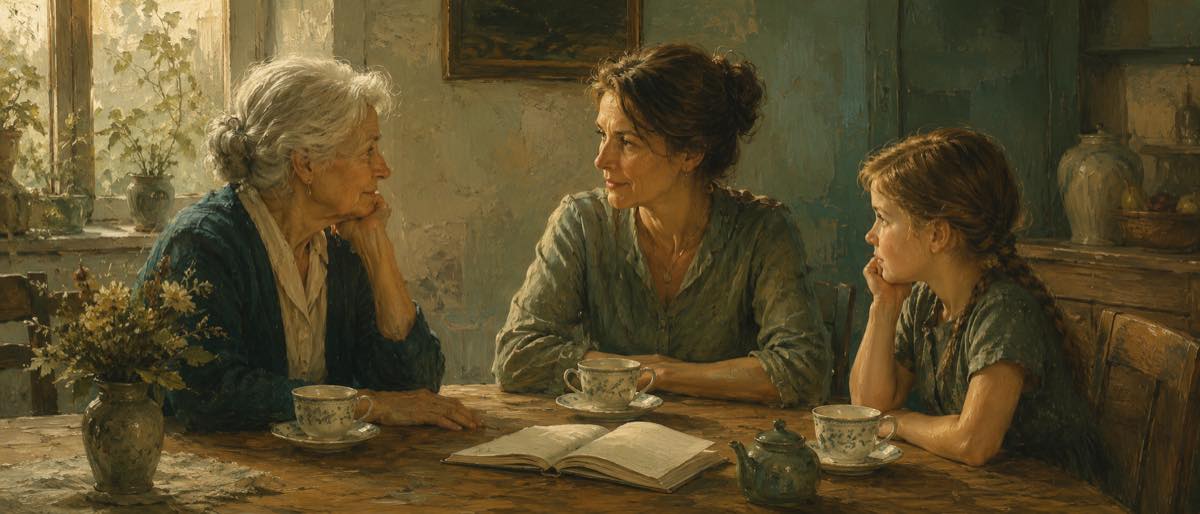
Begin your story 2Sit beside a parent or grandparent. Ask the first question, press record, and let them talk. Kept does the listening and the shaping; the voice stays exactly theirs.
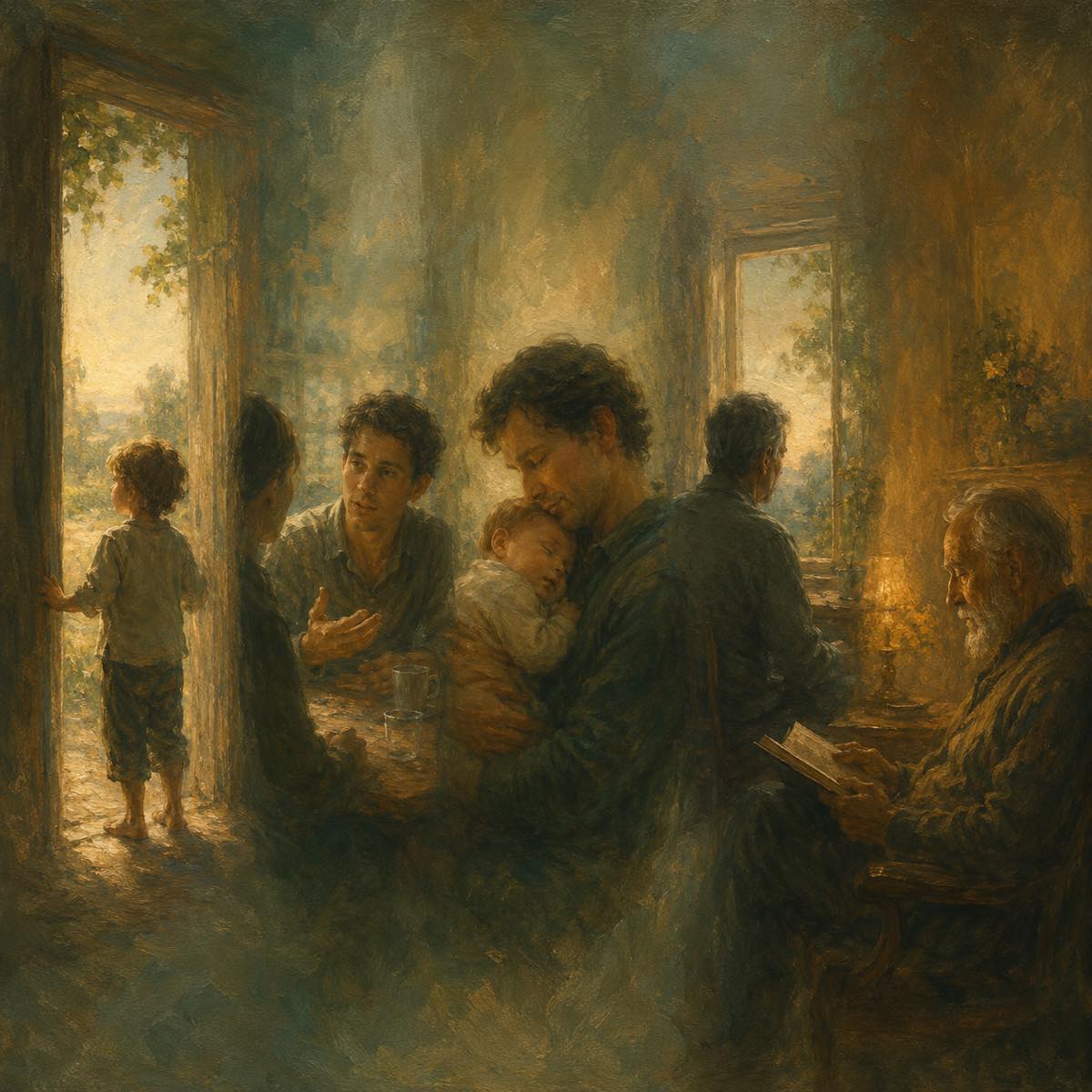
Begin together 3Every life holds more than one book.
The whole arc, beginning to now. Fifty-five questions across the five acts of a life.
What you learned, written down plainly for whoever needs it next.
How you met, what you built, and everything that came after.
What you believe, and what you have seen with your own eyes.
A book written to your child, in your voice, kept for them for good.
The Cookbook. The recipes everyone asks for, and the stories behind them. A small book of its own, not one of the five.
Coming soonNot a survey. The kind of questions you'd answer around a table, one at a time, in no hurry.
Kept is built like a real ghostwriting engagement: someone who listens closely, asks the next right question, and writes it the way you would have, if writing were your job.
Kept gives you the engagement itself: the listening, the follow-ups, the shaping, and typeset pages in your own voice, free while it is early.
Until you tell them. One scene at a time, the telling becomes a book, and once told, a story is kept for good.
"Put me at that table: who sat where, what was on it, what got said every single time."
Read the chapter back. If it lands, tap once. If not, reshape it. The voice stays yours.
Each chapter typesets itself the moment you finish it. Fifty-five questions become a real object you can hold.
Your words, your recordings, your photographs. Yours, always.
Tell it out loud. The recording stays beside the chapter, playable by your family, in your own voice, for good. The telling is the easy part now.
You talk. Kept listens to what you actually said, the green door and the scrape of it, asks the follow-up a good listener would ask, and sets your telling into clean typeset prose. It arranges; it never invents. And if a line does not sound like you, one tap reshapes it. The voice on the page stays yours.
Give Kept to someone and you are not left in the dark for a year. You watch the book itself get thicker: how many questions are told, how far each act has come, the day a new part is finished. Counts and moments, never their words.
Chapters reach you only at the milestones the writer allows, and the raw tellings stay theirs until the day they hand the whole book over. That is the arrangement that makes people speak freely, and a book written freely is the book worth giving.
A real question from Act I, and the ghostwriter listening for what matters. Marcus answered this one aloud on a Tuesday. His book is eight chapters long so far. Keep scrolling; the pages turn.
Told aloud on March 4. The recording lives beside the typeset page, in his voice, playable by his family for good.
The door was green, and it stuck in summer. You had to lift the handle and lean, and everyone who loved us knew that, so nobody ever knocked. You just heard the scrape and knew company was coming.
A place from your early life. Take me to the moment you arrived there. What did you feel?
The end-matter. Every good book has one; open a query and it is kept in ink.
Free in early access, while the first books are being made. Answer the questions, watch the book assemble, keep everything.
When early access closes, Kept is $179 once, including the hardcover. There is no subscription. You are not charged when you sign up: your card is saved, and it is charged only once the person writing has finished the first act and confirmed the writing sounds like them. If that never happens you are not charged, and you still receive whatever chapters exist, printed and bound. Extra copies are $49, or three for $119 with the first print run.
Entirely your pace. Fifty-five questions: one a day is about two months, one a week is a bit over a year, one a month is a few years. There is no clock. Chapters unlock one after another, nothing ever expires, and the next question always waits.
You do not have to be. Speak your answers, write fragments, or add photographs with captions. The ghostwriter does the listening, the follow-ups, and the shaping. You just tell it.
Kept is built for people who do not love screens: big type, one action per page, and a speak-it door that is a single button. And you can always sit beside them, press record, and let them talk.
Nothing is lost. Every finished chapter stays typeset and ready, and the next question waits: a week, a year, however long. A twenty-chapter book is still a book worth keeping.
Only the people you invite. Stories are private by default; you decide who reads and who listens.
The live typeset book and a print-ready export exist today. Hardcover printing is coming as the product grows, and your finished pages will be ready for it the day it arrives.
Completely. Your words, your recordings, your photographs: yours. A print-ready export exists today, so your book can leave with you anytime, and it never stops being yours.
Those services collect answers and print them in order: a question, then what got typed under it, fifty times over. Lovely to have, but it reads the way a form reads, and the person who lived the life did all the writing.
Kept writes the book. A ghostwriter listens to what was actually said, asks the follow-up a good listener would ask, and sets each telling into typeset chapters with a beginning and an arc. Nothing is invented, nothing is padded, and the writer approves every chapter before it counts. You pay once, only after the writing has proven it sounds like them. There is no yearly renewal and no deadline that expires the book.
The book is a real hardcover on your shelf, and it needs nothing from us once it is in your hands.
The rest is yours in the same way: at any moment you can download the complete archive of the work, every chapter, every answer in their own words, every recording in their own voice, as plain files that open on any machine, with no account and no company attached. A story you trust a family with should never depend on the company that helped tell it, including this one.